

Your business needs custom ERP software when disconnected tools start costing more than a build — usually when the same data gets entered twice, stock truth lives in one person’s head, month-end takes weeks, or per-user subscriptions outgrow a one-time build. In Nigeria, custom ERP projects typically run ₦5,000,000–₦30,000,000+, while configured open-source ERP lands lower. But most businesses asking this question don’t need custom ERP yet — here’s how to tell the difference.
We’ve sat on both sides of this decision. We built MerchantPOS — a ready-made POS Nigerian store owners subscribe to — and we’ve built custom platforms like AirtimePay, Myschool.ng (Servicing since 2015) and African Movie DB. So when a manufacturer walks into our D/Line office asking for “an ERP,” nobody here is itching to quote the biggest invoice. Sometimes the honest answer is a subscription. Sometimes it’s Odoo, configured properly. Sometimes it’s a custom build. This guide is how we tell.
What ERP Software Actually Is (And What It Isn’t)
ERP — enterprise resource planning — is one system, one database, running the whole business: inventory, sales, purchasing, accounting, production, HR. When a sale happens, stock drops, the invoice posts, and the reports update. Everywhere. At once.
What it isn’t: QuickBooks is accounting only. A POS — like our own MerchantPOS — is the sales-and-stock frontline. An ERP is the backbone those plug into. A POS tells you what sold. An ERP tells you what it cost, what’s left, what to reorder, and what you made — across every branch.
7 Signs Your Business Needs ERP Software

1. The same data gets entered twice. WhatsApp orders retyped into Excel, then into invoices, then into the accounts book. Every re-entry is a chance to mistype a number that costs you money.
2. Stock truth lives in one person’s head. “Let me call the storekeeper.” If one resignation would blind your inventory, you don’t have a system — you have a hostage situation.
3. Month-end takes weeks. If the owner can’t answer “what did we make this week?” without a meeting, the business is running on lag.
4. Excel is the system. Files named final_final_v3.xlsx. One person holds the formulas. Nobody else can touch them. This works — right up until it catastrophically doesn’t.
5. Branches don’t reconcile. Port Harcourt says one number, Aba says another, Owerri says “we’ll send it tomorrow.” Multi-location without one database is multi-location without truth.
6. Errors cost real money. Wrong invoices, missed deliveries, stockouts during your best week. Add them up for one month. That number is your ERP budget arguing for itself.
7. The taxman is digitising. FIRS e-invoicing became mandatory for large taxpayers (₦5bn+ turnover) in November 2025 and expands to medium taxpayers from July 2026, with phased rollout beyond that (https://edicomgroup.com/blog/mandatory-electronic-invoicing-nigeria). Structured digital records are becoming a legal expectation, not a nice-to-have.
The rule we use: three or more of these, with a measurable monthly cost, means it’s time for an ERP conversation. Whether it should be custom is the next question.
When Custom ERP Is the Right Call
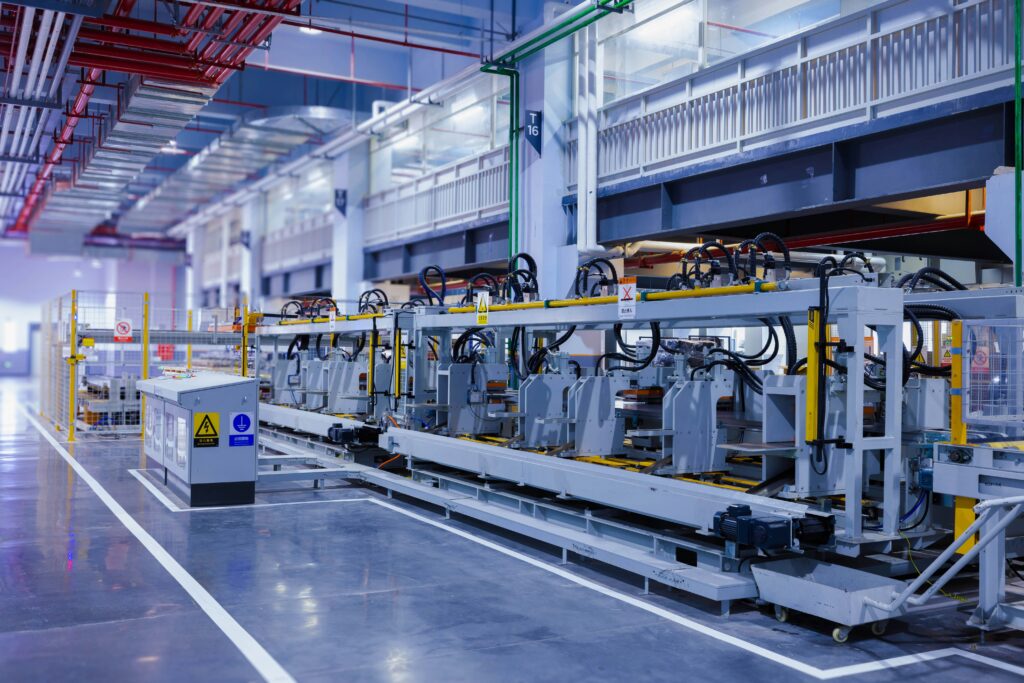
Build custom when:
- Your workflow is the advantage. A manufacturer like Mario Plastics Limited needs product specifications, batch tracking and distributor logic that generic tools bend around badly. A Port Harcourt oil-servicing firm tracking equipment certifications and HSE compliance? No off-the-shelf tool speaks that language natively.
- Per-user pricing punishes your growth. Fifty to two hundred staff on a dollar-priced per-user ERP is a salary line, not a software line. We’ll do the maths below.
- You need Nigerian rails. Deep Paystack/Flutterwave reconciliation, bank-transfer matching, USSD for field sales, offline-first for patchy internet. Global ERPs treat these as edge cases. Here, they’re Tuesday.
- Data control is board-level. Under the Nigeria Data Protection Act, knowing where customer data lives and who can touch it isn’t optional. The NDPC is the regulator; “it’s on someone’s cloud somewhere” is not an answer.
- The system is the product. Hospitals beyond their public website — a project like Shammah Christian Hospital’s starts with the site but raises bigger patient-flow questions — or platforms like AirtimePay, where the software is the business.
If that’s you, custom ERP development in Port Harcourt starts with a scoped conversation, not a price list.
When You Should NOT Build Custom ERP
The honest section. Don’t build when:
- Your processes are standard. Trading, distribution, retail — Odoo, ERPNext or Sage already do this well. Building what exists is an expensive way to feel special.
- Your budget is under ~₦5 million. That’s configuration territory, and there’s no shame in it.
- Your processes are chaos. Software amplifies whatever process you feed it. Digitised chaos is just faster chaos. Fix the process first — an IT consulting engagement is cheaper than a failed ERP.
- You run a retail store. You need a good POS, not an ERP. We built MerchantPOS for exactly this — multi-store, inventory, VAT reports, without the ERP price tag.
- Nobody will use it. The most expensive ERP is the one staff quietly abandon for WhatsApp. Adoption is a change-management project, not a feature.
The middle path most businesses miss: configure Odoo or ERPNext first, run it for a year, then build custom only around what provably breaks. (We cover this decision in depth in our guide to custom vs ready-made software — link once published.)
Custom ERP vs Ready-Made ERP at a Glance (2026)
| Option | Licence cost | Ongoing | Best for |
|---|---|---|---|
| ERPNext | Free, open-source | Hosting from ~$5/mo + support | Budget-conscious teams wanting full ERP, no per-user fees |
| Odoo | Free One App plan; paid ~$31–61/user/mo (US list, regional pricing varies) | Per-user subscription + implementation | Growing teams wanting modular, polished ERP |
| SAP Business One | ~$110–219/user/mo cloud, or perpetual licence | Licence + 18–20% annual maintenance + implementation | Established firms wanting a global standard |
| Custom build | ₦5m–₦30m+ one-time | Naira hosting + support | Unique workflows, scale economics, full ownership |
Dollar figures convert at today’s rate — plug in your own. The pattern to notice: ready-made ERPs rent you capability in dollars; custom owns it in naira. Which wins depends on your user count and how weird your workflow is.
What Custom ERP Costs in Nigeria (2026)

Market ranges, not a price list — the same caveat as our website cost guide:
| Scope | Typical range |
|---|---|
| Single-department system (inventory + invoicing) | ₦2,000,000 – ₦6,000,000 |
| Multi-department custom ERP | ₦5,000,000 – ₦30,000,000+ |
| Configured Odoo/ERPNext implementation | ₦1,500,000 – ₦8,000,000 + hosting |
| Running costs | Hosting from ₦300,000/yr; support ₦50,000–₦150,000/mo; training budget |
Timeline: a focused first module in 2–4 months; a full phased rollout 4–12 months. Anyone promising a complete ERP “in six weeks” is selling you a template with your logo on it. Hosting and maintenance are real lines — see managed hosting for what proper infrastructure costs.
The Cost-of-Chaos Test (One Afternoon)
Before you decide, price the status quo. Add up, per month: hours lost to double entry × staff rates + stock losses + missed sales + error corrections. Call it ₦400,000 (illustrative — use your numbers).
Status quo: ₦400,000 × 36 months = ₦14.4m over three years Custom build: ₦8m + ~₦2.4m running = ~₦10.4m over three years
If your chaos costs more than the build, the case closes itself. Three caveats: the build only wins if staff adopt it; scope creep is real; and the exchange rate will move your ready-made comparison. Run the test with your own numbers before anyone signs anything.
Port Harcourt: Why Local Matters for ERP

ERP is a marriage, not a purchase. You’ll live with this system — and its support team — for years. That changes what “local” is worth:
- The industry mix is specific. Trans-Amadi’s manufacturers, oil-and-gas servicing firms, hospitals, schools, and the Aba–Owerri distribution corridor. These workflows are exactly where generic ERPs bend badly and custom earns its keep.
- Scoping happens face to face. Walking a warehouse in person beats a laggy video call. Our team scopes from D/Line, Port Harcourt — and if you’re comparing vendors, we’ve reviewed the best web design companies in Port Harcourt, including nine that aren’t us.
- Support is in your time zone, in your city. When month-end breaks, “submit a ticket” is not a plan. Neither is a vendor who stops picking calls.
- Naira-billed builds don’t reprice with the exchange rate. Dollar licences do.
Frequently Asked Questions
What is ERP software in simple terms?
One system that runs your whole business — inventory, sales, purchasing, accounting, production, HR — on one database, so every department sees the same truth at the same time.
How much does ERP cost in Nigeria?
Custom ERP typically runs ₦5,000,000–₦30,000,000+; configured open-source implementations ₦1,500,000–₦8,000,000 plus hosting; global ERPs charge per user in dollars plus implementation. Full breakdown in our cost guide.
Is Odoo or ERPNext really free?
ERPNext’s licence is free and open-source — you pay hosting and implementation. Odoo has a free One App plan; multi-app use is per-user, per-month, with regional pricing. “Free licence” never means “free ERP.”
How long does ERP implementation take?
A focused first module: 2–4 months. A full phased rollout: 4–12 months. Big-bang launches (everything at once) fail more often than phased ones — go live department by department.
What’s the difference between ERP, accounting software and a POS?
Accounting software (QuickBooks) handles the books. A POS (MerchantPOS) handles sales and stock at the counter. ERP connects both to purchasing, production, HR and every branch — one database for the whole business.
Do small businesses in Nigeria need ERP?
Usually not yet. Start with a POS and accounting software. Move to ERP when three or more of the seven signs above are true and costing you money monthly — not before.
Who builds custom ERP software in Port Harcourt?
SilvaCreate, from our D/Line office. We’ve built MerchantPOS, AirtimePay, Myschool.ng and platforms for manufacturers and hospitals, and we serve clients across Rivers State, Owerri, Nigeria and internationally. The first consultation is free.
The Best ERP Is the One That Fits
Buy what’s standard. Configure what’s close. Build what makes you different. And when you’re not sure, run the cost-of-chaos test — it settles most arguments in an afternoon.
Want a second opinion? Tell us what’s breaking and we’ll give you an honest assessment — including “subscribe to this instead” when that’s the truth. SilvaCreate is a Clutch-recognised software and digital marketing agency in Port Harcourt, and we’d like to build for you.
Book your free consultation → Let’s talk about your business, the next level.